We may earn money or products from the companies mentioned in this post.
As an Amazon Associate I earn from qualifying purchases.
Table Of Contents
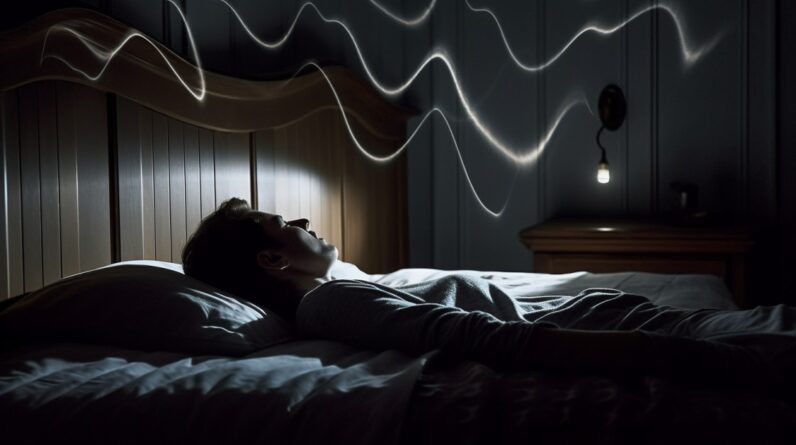
Are you one of the many people who experience a high-pitched ringing or a steady hum in your ears even when there’s no external sound present? This condition, known as tinnitus, is a common problem that affects millions of people worldwide. But have you ever considered that your vision may be influencing this auditory condition?
Introduction
When you start digging into the mysteries of the human body, you often find unexpected connections. Take the eyes and ears, for example. At first glance, these two body parts have distinct roles, right? But what if we told you that your sight could potentially affect your hearing? Let’s turn our attention to tinnitus, a condition that’s often described as a phantom ringing, buzzing, humming, or hissing in the ears.
Tinnitus seems straightforward. It’s a sound that isn’t there, a noise that seems to originate inside a person’s head. But here’s where the plot thickens. As per our proposition, could it be possible that your vision problems may be causing your tinnitus? Or, in essence, could your seeing be interfering with your hearing? It’s a perplexing proposition, isn’t it? We’re going to unravel this hypothesis bit by bit.
Understanding Tinnitus
Before we dive into the crux of the matter, let’s make sure we understand the fundamental aspects of tinnitus. Tinnitus, derived from the Latin word for “ringing,” is the perception of sound where no external sound source exists. This phantom sound may appear as ringing, buzzing, roaring, clicking, hissing, or humming, and it may vary in pitch from a low roar to a high squeal. Inside the hush of your head, this sound can seem louder and more disruptive, quite like a whisper in a silent library.
If you’re eager to comprehend what tinnitus sounds like, imagine a hissing teapot, a relentlessly droning fan, or even the buzz of fluorescent lights – phenomenon perceived without the presence of the actual sound. You can learn more about the different tinnitus sounds on our website.
Sometimes, tinnitus behaves like an unwanted guest. It arrives unannounced, causes inconvenience, and then leaves without a moment’s notice. This temporary tinnitus could be a result of exposure to loud noise or due to underlying health conditions like hypertension or an ear infection. That said, it’s crucial to note that temporary tinnitus should not be ignored, as it may pave the way for more chronic issues if neglected.
So now that we understand the gist of tinnitus let’s delve into the intriguing hypothesis: Can your vision problems be influencing your auditory maladies?
Understanding Vision Problems
Just as sound is integral to hearing, vision is fundamental to seeing. But what happens when our eyes, the gatekeepers of this vision, face problems? Common vision issues range from refractive errors, like nearsightedness and farsightedness, to more severe conditions like glaucoma and macular degeneration. Symptoms can vary from blurred vision to headaches or even seeing halos around lights. That’s quite a spectrum, isn’t it?
But here’s the kicker: vision is not confined merely to the domain of the eyes. The eyes, brain, and even our auditory senses are interconnected in intricate ways. Let’s break this down. When light enters our eyes, it hits the retina that sends signals to the brain, allowing us to see. At the same time, our eyes contribute to spatial awareness and balance – functions also associated with our auditory system. Isn’t it remarkable how our senses work together, almost like a well-conducted orchestra?
Now, armed with this understanding, let’s connect the proverbial dots and delve into the peculiar relationship between vision problems and tinnitus.
The Connection Between Vision Problems and Tinnitus
While the idea that vision problems could lead to ringing in your ears might sound odd initially, the connection becomes clearer when you consider the intricate relationship between our senses.
Imagine the strain your eyes undergo when struggling to see clearly. This strain can incite not only headaches but also cause an increase in pressure within the auditory system, which could subsequently trigger or heighten tinnitus symptoms. In fact, vision-induced tinnitus might not be as unusual as you think.
Research into the complex interplay of our senses has brought forward instances where changes in vision have corresponded with changes in perceived sound. You can read about tinnitus and vision changes in one of our dedicated blog posts.
Likewise, specific vision problems can exacerbate existing tinnitus symptoms. Vision impairment stresses the brain as it struggles to adapt to the reduced visual input, and this additional strain can potentially intensify the tinnitus. This interrelationship between tinnitus and vision problems is a subject warranting further exploration.
It seems that our senses, much like the threads of a tightly woven fabric, are interconnected in surprising ways. The challenge is to understand these dynamic interconnections and leverage them to mitigate conditions like tinnitus effectively. It’s evident that the exploration into the unexpected links between vision and hearing is just beginning.
Scientific Evidence
When it comes to elucidating the connection between vision problems and tinnitus, science provides a wellspring of intriguing answers. Some research indicates a potential link between certain vision problems and tinnitus. While not a rule, these instances suggest that our vision may indeed exert some influence on our auditory sensations.
For instance, research has pointed out instances where tinnitus patients report changes in the perceived intensity or pitch of their phantom sounds associated with eye movement or visual focus alteration. Interesting, isn’t it?
Additionally, studies delve into how tinnitus can affect your vision. Certain types of tinnitus, such as pulsatile tinnitus, can occasionally accompany visual symptoms due to increased intracranial or intraocular pressure. More about these unexpected interactions between tinnitus and vision can be found in our comprehensive blog posts.
Related Conditions
Further muddying the waters between vision problems and tinnitus, specific eye conditions such as glaucoma seem to hold a peculiar association with tinnitus. Glaucoma, a severe eye condition marked by damage to the optic nerve, often elevated intraocular pressure, which may, in turn, contribute to tinnitus.
Simultaneously, some eye problems not directly linked to vision may also cause similar effects. For example, dry eyes have been linked to tinnitus in some cases. These fascinating interconnections between Glaucoma and Tinnitus, as well as Tinnitus and Eye Problems, are worth exploring in more depth.
Managing Tinnitus and Vision Problems
Given these complex relationships, managing co-existing vision problems and tinnitus requires a wholistic approach. Choose glasses or contact lenses to correct vision problems, which might alleviate the strain contributing to tinnitus. In the case of tinnitus, a myriad of treatment options range from lifestyle alterations to the use of hearing aid devices and tinnitus masking. Remember, a tailored, patient-specific management plan will always be the most effective.
Conclusion
Navigating the intricate labyrinth of our senses is indeed a fascinating journey. Are our eyes and ears intimately connected? Can the way we see influence the way we hear? Perhaps. The unique interplay between vision and hearing suggests potential connections that need further exploration. While current research and anecdotal evidence highlight intriguing overlaps between vision problems and tinnitus, more robust scientific studies are required to fully comprehend this relationship. In the meantime, understanding and acknowledging these connections could pave the way for more effective, integrated treatment approaches. For a more profound understanding of this condition, do explore Tinnitus Explained.
Can Vision Problems Cause Tinnitus
Frequently Asked Questions (FAQ)
Currently, scientific research suggests a potential link between some vision problems and tinnitus. However, this association is not universal and more robust scientific studies are required to fully define the relationship. Certain situations, such as increased eye or intracranial pressure, can produce tinnitus symptoms.
Tinnitus predominantly affects the auditory system. However, certain types of tinnitus can sometimes accompany visual symptoms due to increased intracranial or intraocular pressure.
A holistic approach is required to manage co-existing vision problems and tinnitus. Correcting vision problems and using treatments such as hearing aid devices and tinnitus masking can alleviate the strain contributing to tinnitus. A tailored, patient-specific management plan is always the most effective.
Glaucoma, a condition marked by damage to the optic nerve often originates from elevated intraocular pressure, which may, in turn, contribute to tinnitus. Though not applicable in all cases, the association could offer insights into the interplay between our auditory and visual systems.
Research points out instances where patients report changes in the perceived intensity or pitch of their tinnitus associated with eye movement or visual focus alteration. While definitive conclusions cannot be drawn, these instances highlight an intriguing aspect of the sensory interplay within our bodies.
Amazon and the Amazon logo are trademarks of Amazon.com, Inc, or its affiliates.
No related posts.