We may earn money or products from the companies mentioned in this post.
As an Amazon Associate I earn from qualifying purchases.
Table Of Contents
Introduction
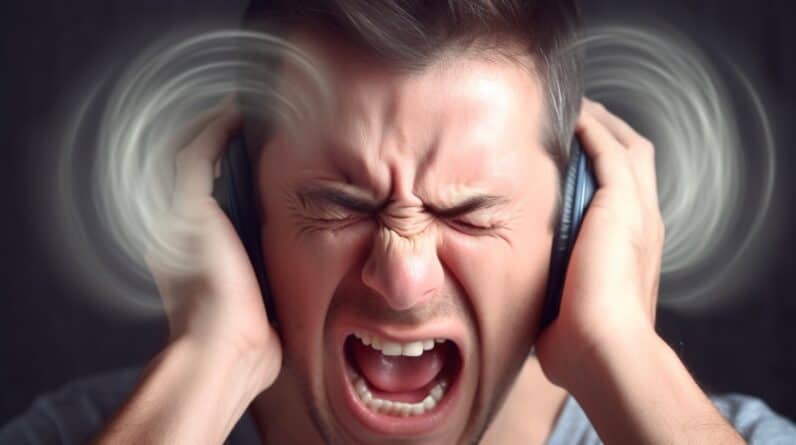
If you’ve ever ended a rock concert with your ears buzzing or stepped out of a noisy environment and wondered about the imaginary ‘whistle’ you hear, then you’ve encountered tinnitus. But for some people, that unpleasant sensation of ‘ringing in the ears‘ is a constant companion. When combined with high-frequency hearing loss, tinnitus brings a unique set of challenges to an individual’s daily life. Let’s delve deeper into what high-frequency hearing loss and tinnitus entail.
Understanding High-Frequency Hearing Loss
Simply put, high-frequency hearing loss refers to difficulty hearing sounds in the higher frequencies. This range typically includes the 2000 to 8000 Hz range, a range in which speech occurs. So, imagine trying to single out someone’s voice in a bustling restaurant – difficult, isn’t it? That’s the daily experience for those with high-frequency hearing loss.
The effects of this condition stretch beyond just straining to hear someone speak. It could mean the difference between hearing the beep of a smoke alarm or not. It could distance you from loved ones, as the conversation becomes exhausting and frustrating.
As for its causes, you’d be surprised that it isn’t just loud rock concerts or working in a buzzing factory that’s responsible. While indeed excessive noise exposure is a classic cause, there are numerous others. From certain medication to aging, high-frequency hearing loss can creep up on anyone. One such cause is a condition called High-Pitched Tinnitus.
Relationship Between High-Frequency Hearing Loss and Tinnitus
High-Pitched Tinnitus could be one of the culprits behind a person’s high-frequency hearing loss. You might be wondering, “Why is my tinnitus so loud today?” The answer lies in the way our brains interpret these high-pitched phantom sounds.
Various factors tend to exacerbate tinnitus, a major one being exposure to loud noise. Interestingly, tinnitus isn’t just a persistent whine. Individuals suffering from high-frequency hearing loss often report that their tinnitus ‘changes pitch‘. Some may even hear it at the border of ultrasound, as a 16,000 Hz hum further confuses the soundscape.
Understanding the relationship between high-frequency hearing loss and tinnitus is an ongoing process. Research is still busy unraveling the knot of interactions between our nervous system, our auditory system, and the environment around us. Ultimately, gaining knowledge is the first step towards finding a solution. So, rather than being overwhelmed by the noisy world around us, let us try to understand it better for our benefit.
Understanding Tinnitus
As we journey deeper into understanding these conditions, let’s pause for a moment – do you hear that? It’s silence! Or for those with tinnitus, a symphony of sounds that emanate from within the ear or head. To those fortunate enough not to have experienced it, imagine hearing a constant high-pitched ringing that no one else can hear. That’s tinnitus! But, why does tinnitus get louder? Well, it can vary based on external factors such as stress and certain foods.
Moreover, there are different types of tinnitus. Some folks with ‘garden variety’ tinnitus can hear a low hum, while others with high-frequency tinnitus may hear an incessant, high-pitched squeal. It’s just as diverse as our own personalities, and intrinsically unique.
Understanding the specific pitch one hears is crucial in dealing with tinnitus. That’s where something known as the tinnitus pitch matching procedure comes in. This innovative way gauges the pitch and loudness of a sufferer’s tinnitus and helps find suitable treatments.
Management and Treatment Options for High-Frequency Tinnitus
Thankfully, there is a host of treatment options available for high-frequency hearing loss and tinnitus. These include medications as well as devices designed to redirect the patient’s focus away from disruptive sounds towards softer, more soothing noises.
Specifically for high-frequency hearing loss and tinnitus, hearing aids are a genuine lifesaver. But gracing the ears of millions of people worldwide, they cut through the high-pitched din, allowing wearers to listen, engage, and live fully.
You know what they say, ‘Health is wealth,’ and in this case, this age-old adage rings true. Modifying one’s lifestyle to support a tinnitus-free existence reaps dividends in the long run. Thoughtful dietary changes, regular physical activity, and a reduction in exposure to loud noises can help manage high-frequency hearing loss and tinnitus.
Coping Strategies and Support for Sufferers of High-Frequency Tinnitus
Akin to any health journey, the road to understanding and dealing with high-frequency hearing loss and tinnitus is long and fraught with challenges. But fear not! There are numerous effective coping strategies and support mechanisms around. You’re not alone.
Patient support groups and online forums offer a safe haven, while therapeutic modalities like meditation and yoga provide effective coping strategies that are within reach of anyone willing to try them.
Conclusion
In this grand journey, we’ve navigated through what high-frequency hearing loss and tinnitus are, what causes them, and how they’re intertwined. Crucially, we’ve explored treatments and coping techniques that could serve as a beacon of light in a high-pitch, noisy world.
Remember, while understanding one’s ailment is half the victory, it’s essential never to lose sight of the importance of seeking professional help when dealing with tinnitus caused by high-frequency hearing loss. With the right help and strategies, peace and quiet aren’t as elusive as one might think. So let’s turn the volume down, shall we?
High-Frequency Hearing Loss And Tinnitus - Frequently Asked Questions (FAQ)
High-frequency hearing loss refers to a difficulty hearing sounds in the higher frequencies, typically 2000 to 8000 Hz range, which is where a lot of the speech intelligibility lies.
Tinnitus is characterized by a persistent sound that emanates from within the ear or head, often described as a ringing or buzzing noise. Tinnitus can be aggravated by high-frequency hearing loss, and the pitch one hears can vary significantly depending on the individual.
There are several treatment options for high-frequency hearing loss and tinnitus, including medications, hearing aids, and lifestyle modifications. It’s essential to consult with a healthcare professional for personalized advice.
Yes, there are numerous effective coping strategies, including meditation, yoga, therapeutic activities, and joining support groups or online forums that offer a safe haven for people dealing with these conditions.
Tinnitus might get louder due to various external factors such as stress levels or certain foods, as well as internal factors, including overall health or exposure to loud noises.
Amazon and the Amazon logo are trademarks of Amazon.com, Inc, or its affiliates.